THE ROOM THAT WAS NEVER JUST A ROOM
The hall was built for ceremony, but on that day it felt more like a pressure chamber pretending to be a stage. Every seat was filled with people who understood the rules of public speech—what is said, what is implied, and what is carefully left unsaid. Cameras lined the perimeter like silent witnesses that never blink, never interrupt, never forgive ambiguity.
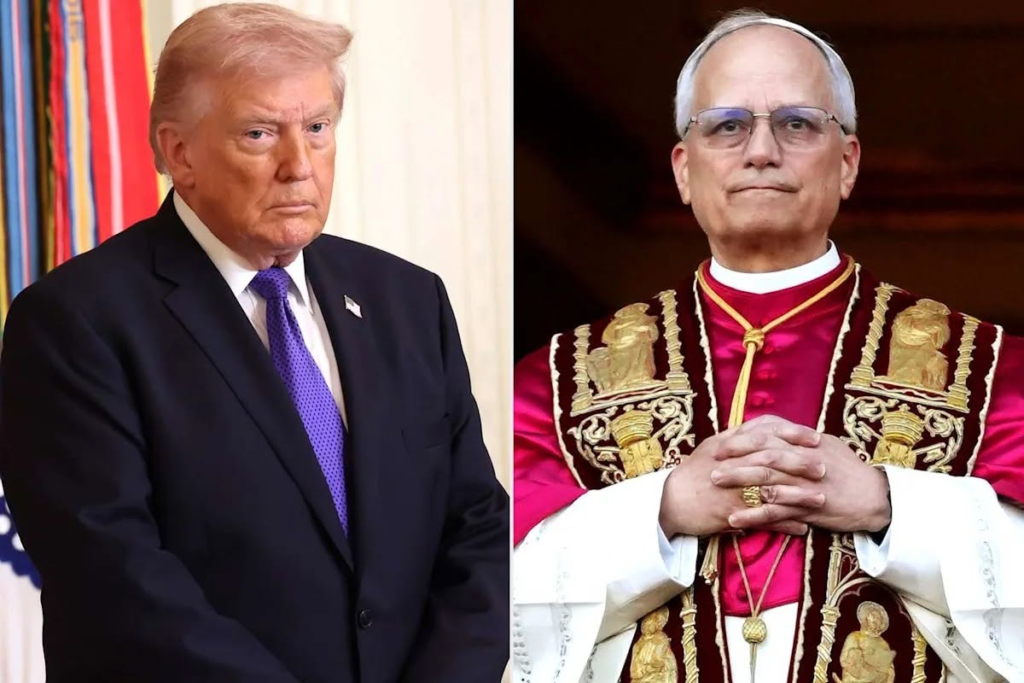
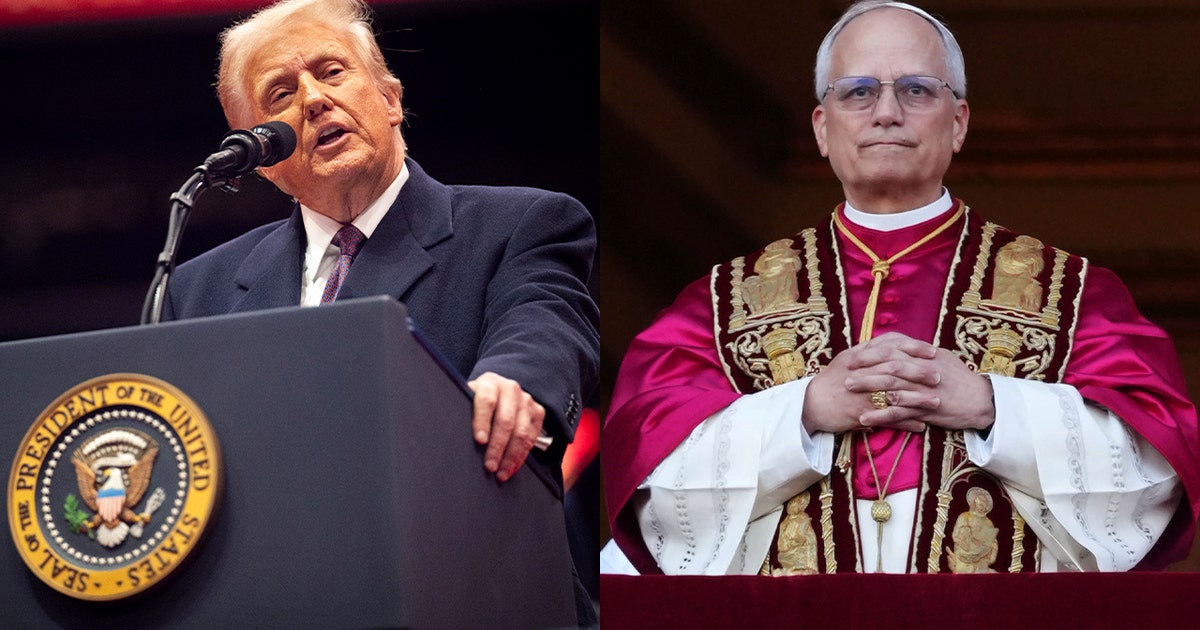
At the center stood Pope Leo XIV, framed not by theatrics but by stillness. He did not move as someone trying to capture attention. He moved as someone who already believed attention had no choice but to come.
His presence in this fictional reconstruction is not about spectacle, but about tone. And tone, in spaces like this, often determines whether a moment becomes a footnote or a fracture line.
What made the atmosphere unusual was not what was being said yet—but the collective sense that whatever came next would not fit comfortably into expected categories.
:max_bytes(150000):strip_icc():focal(749x0:751x2)/Donald-Trump-arrives-for-a-Medal-of-Honor-Ceremony-Pope-Le--XIV-is-seen-for-the-first-time-from-the-Vatican-balcony-031826-def02bb5c18840559263c68d9bc26793.jpg)
WHEN CALM TURNS INTO STRUCTURE, AND STRUCTURE BECOMES WARNING
The first words were not loud. They did not need to be. They were delivered with a controlled cadence that gave each sentence enough space to settle before the next arrived. It was the kind of speech that does not rush toward reaction, but instead builds weight through restraint.
Pope Leo XIV spoke as though he was describing a pattern rather than delivering an opinion. The phrasing, in this fictional narrative, suggested continuity—something unfolding over time rather than a single moment of crisis.
The audience responded not with interruption, but with recalibration. People shifted slightly in their seats. Some leaned forward. Others stopped moving entirely. In live environments like this, silence is never empty; it is active participation.
And as the speech continued, that silence began to feel heavier than sound.
WHEN LANGUAGE BECOMES A FIELD OF INTERPRETATION
In any high-level political or symbolic setting, words do not remain fixed. They expand as they travel through perception. A sentence spoken in one tone becomes something else when repeated in another.
Within this fictional framework, the statements attributed to Pope Leo XIV were not received as simple declarations, but as layered meaning—interpretation folded into interpretation.
Some heard warning. Others heard analysis. Others heard something closer to philosophical reflection about instability and institutional fragility. None of these readings were mutually exclusive, and that ambiguity itself became part of the tension.
The room did not disagree. It processed.
And processing, in moments like this, is often slower than speech.
THE MOMENT WHEN CONTROL BECOMES VISIBLE
Behind every formal gathering is an invisible structure of management—producers of tone, moderators of timing, architects of flow. But in moments where speech diverges from expectation, that structure becomes briefly visible.
A pause too long. A breath held slightly differently. A shift in posture that suggests recalibration rather than comfort.
Pope Leo XIV continued without breaking rhythm, which only intensified the perception that the room itself was adjusting around him rather than the other way around.
Control, in these environments, is rarely about dominance. It is about consistency. And consistency, once established, can feel indistinguishable from certainty.
The audience did not interrupt. But they also did not relax.
WHEN INTERPRETATION BECOMES THE SECOND SPEAKER IN THE ROOM
As the fictional speech developed, something subtle happened: the audience began to form a parallel version of the event in their own minds. One version existed in real time. The other existed in interpretation.
This is where modern narrative environments become complex. No single statement remains singular. It branches. It multiplies. It evolves faster than it can be corrected or confirmed.
Within this fictional reconstruction, Pope Leo XIV becomes less a speaker and more a catalyst for interpretive expansion. Each listener constructs a slightly different version of meaning based on expectation, belief, and prior context.
The result is not confusion. It is layering. And layering creates depth, but also instability.
Because once interpretation begins speaking alongside speech, the original voice is no longer alone.

WHEN FEAR IS NOT SHOUTED, BUT IMPLIED
The most powerful tension in the room was not visible confrontation. It was implication. The sense that certain ideas, once introduced, cannot easily be contained again within neutral language.
In this fictional narrative, the tone attributed to Pope Leo XIV carried a sense of inevitability rather than urgency. Not that something was happening immediately—but that patterns, once set in motion, tend to complete themselves.
This kind of framing does not require volume. It requires structure. And structure, when perceived as warning, changes how every subsequent sentence is received.
Even silence begins to feel meaningful.
Even pauses begin to feel intentional.
WHEN A MOMENT LEAVES THE ROOM BUT DOES NOT LEAVE MEMORY
Eventually, as all structured events do, the moment transitions. The cameras remain steady. The audience does not erupt. There is no collapse, no disruption, no visible rupture in the physical world of the event.
But something has already shifted in how the moment will be remembered.
Pope Leo XIV remains within the narrative not as a conclusion, but as a point of reflection—a figure through which questions about authority, interpretation, and perception continue to circulate long after the speech itself has ended.
Because in modern narrative environments, the end of a moment is never the end of its meaning.
It is only the beginning of its retelling.
A FINAL SILENCE THAT CONTINUES AFTER THE WORDS STOP
When everything is over, the room does not feel dramatic. It feels normal again. People stand. Chairs shift. Conversations resume at lower intensity. The machinery of public life returns to its expected rhythm.
But beneath that surface, something remains unsettled—not because anything was proven, but because something was suggested and never fully closed.
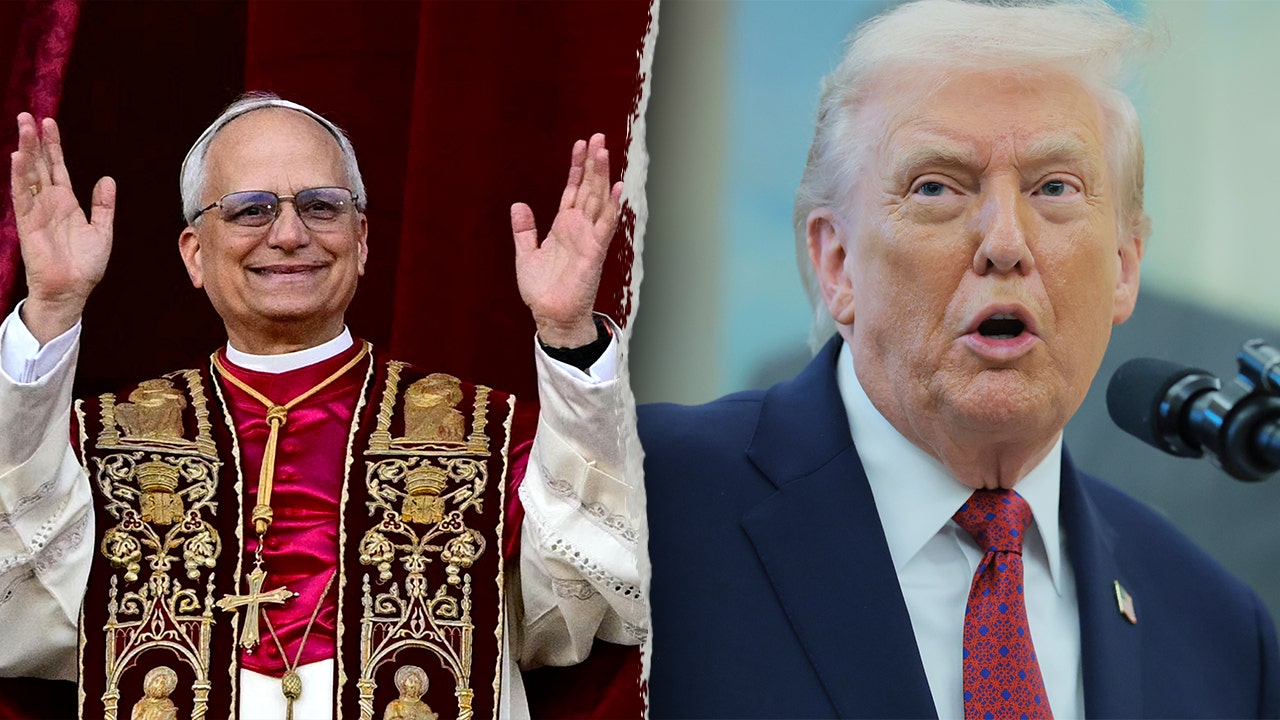
Pope Leo XIV leaves the stage as he arrived: without excess motion, without spectacle, without transformation of tone. And yet the space he leaves behind feels slightly altered, as if interpretation itself has been expanded.
In the end, what lingers is not certainty, but resonance.
And resonance, unlike speech, does not end when the speaker stops talking.